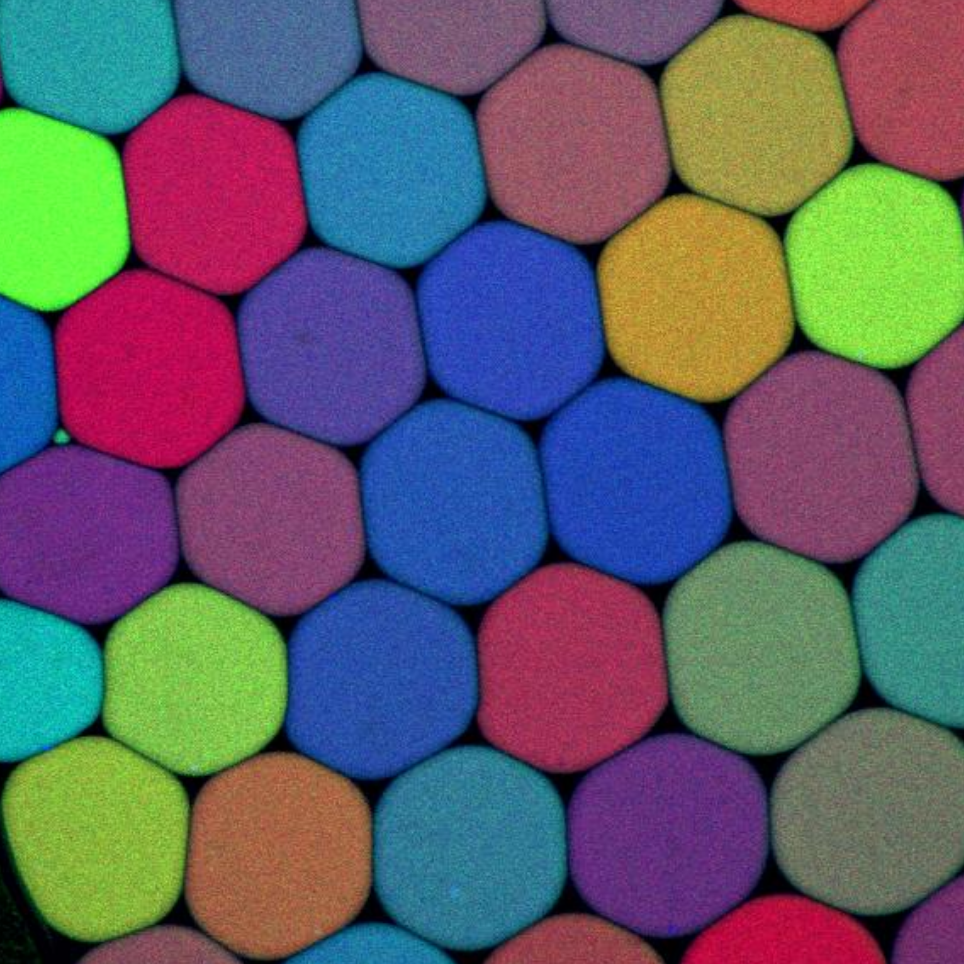
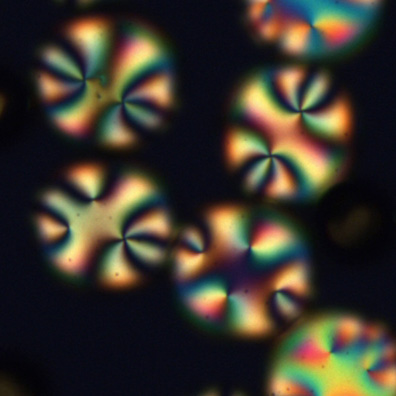
We are theorists and experimentalists working at the interface of physics, chemistry, biology and computer science. Our research focuses on soft matter (colloids, polymers, liquid crystals, granular matter, thin sheets...), active matter (self-propelled colloids, swimming droplets, walking grains, swarms of robots... ) and molecular systems (DNA, RNA, enzymes...). We study various aspects of these systems such as topology, self-assembly, interfaces, information processing, evolution..., while also developing general theoretical methods. The name Gulliver captures the diversity of scales that are studied in the lab.

Discover our Internships and PhD 2026

Procedure for CNRS applications with the support of Gulliver

News

Francois Villemot joins Gulliver

We are pleased to welcome Francois Villemot as our new CNRS research engineer in Gulliver. Francois obtained his PhD in Montpellier in 2014, (...)


Paul Baconnier, lauréat du prix Claudine Hermann 2023

Paul Baconnier completed his thesis at the Gulliver laboratory at ESPCI, under the supervision of Olivier Dauchot. In the course of his (...)


Bronze medal 2025: Guillaume Gines experiments with DNA coding

Guillaume Gines, a research fellow at the GULLIVER laboratory, has been awarded the CNRS bronze medal for his work on DNA-based nanotechnologies (...)


> More news...

Publications

Tunable Poly(butylene oxide)-stat-polyglycidol Copolymers for Microfluidic-Assisted Nanoprecipitation Nanoparticle Design

The self-assembly of amphiphilic copolymers into well-defined nanoparticles depends on the interplay among polymer composition, solvent exchange... (...)


Symmetry-driven artificial phononic media

Phonons are quasiparticles associated with mechanical vibrations in materials. They are at the root of the propagation of sound and elastic waves,... (...)


Transition to Collective Motion in Nonreciprocal Active Matter: Coarse Graining Agent-Based Models into Fluctuating Hydrodynamics

Two hallmarks of nonequilibrium systems, from active colloids to animal herds, are agent motility and nonreciprocal interactions. Their interplay... (...)


> More publications

Top