We are theorists and experimentalists working at the interface of physics, chemistry, biology and computer science. Our research focuses on soft matter (colloids, polymers, liquid crystals, granular matter, thin sheets...), active matter (self-propelled colloids, swimming droplets, walking grains, swarms of robots... ) and molecular systems (DNA, RNA, enzymes...). We study various aspects of these systems such as topology, self-assembly, interfaces, information processing, evolution..., while also developing general theoretical methods. The name Gulliver captures the diversity of scales that are studied in the lab.

Discover our

Procedure for

Active matter and collective effects Programmable matter Topological matter Interfaces in soft matter Theory of soft matter and biophysics

News

Paul Bernard successfully defends his PhD thesis

Gulliver congratulates Paul Bernard on the successful defence of his PhD thesis, entitled “Mechanical Response and Energetics of Polar Active (...)


Megan Delens joins Gulliver

Gulliver is pleased to welcome Megan Delens as a new Postdoctoral Researcher. Her research will focus on multipolar capillary interactions and (...)


Julien Perradin joins Gulliver

Gulliver is pleased to welcome Julien Perradin as a new Postdoctoral Researcher. His research will focus on statistical physics, under the (...)


> More news...

Publications

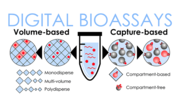
Digital bioassays through the lens of partitioning strategies

<
Absolute quantification of biomolecules increasingly relies on digital bioassays, which convert continuous concentration measurements into... (...)


Residual Semi-crystalline Particles Released during Enzymatic Degradation of Plastics

<
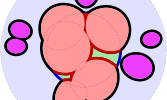
Enzymatic recycling of plastics is limited by the presence of semi-crystalline spherulites that are recalcitrant to enzymatic depolymerization. ... (...)


Learning to outgrow the competition: Reaction–diffusion systems that adapt to time-dependent environments

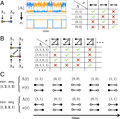
A fundamental challenge in both biology and engineering is understanding how adaptation can emerge from simple physical or chemical building blocks.... (...)


> More publications

Top